Beginner
≈ 1 h 30 minSuggested range45 min – 2 h 30 min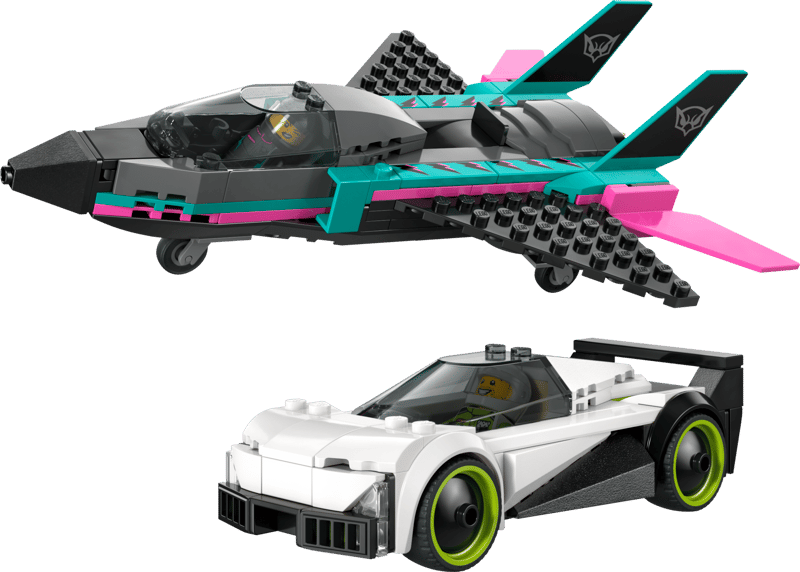
Official LEGO® image · © LEGO Group and/or the respective rights holders. Source: LEGO Italy ↗
City · SET 60489
Jet vs. Car
A dark jet and white sports car form a pair of vehicles to compare in play.
- Pieces
- 259
- Release year
- 2026
- Theme
- City
- Set number
- 60489
- LEGO recommended age
- 6+
- LEGO retail price · Italy
- 29.99 €
Available at LEGO Italy when checked on 28 October 2026. Availability can change. Check the store for the latest information.
Retail price reported by the LEGO source for the stated market. Check the store for current price and availability; this does not establish the launch price. LEGO ↗ · Reference checked on 28 October 2026
Official English name verified at: LEGO English catalogue ↗ · Checked on 26 October 2026.
TIME TO BUILD
How long does it take to build Jet vs. Car?
A starting point for planning your build. Times for each experience level are editorial estimates, not measurements submitted by HowLongToBuild users.
Editorial estimate · first build
Intermediate
≈ 1 hSuggested range30 min – 1 h 45 minExperienced
≈ 45 minSuggested range15 min – 1 h 15 minBased on one person building the set for the first time, following the original instructions and using numbered bags where supplied. Includes normal piece-finding and minor adjustments; excludes long breaks, filming, dismantling and modifications. Sources may use different methods. This range is neither a statistical interval nor a limit: your build may take less or more time.
How we estimate times · sources and method
Editorial assessment of the first illustrated arrangement: A dark jet and white sports car form a pair of vehicles to compare in play. The estimate includes aircraft and car, not just one vehicle or imagined racing time. A first build following the instructions, including normal piece finding; an adult may help when needed. Breaks and subsequent play are excluded. No verified timed build: indicative values with substantial variation.
Sources do not always specify the builder’s experience. The three experience bands are our editorial assessment, based on the complexity of the set and individual accounts where available.
- LEGO · set-specific instructions ↗
Official name, pieces, age and imagery; no timed building data.
- LEGO · set manual ↗
Document for this set number. The duration is an editorial estimate, not a LEGO timing.
Checked: 26 October 2026 · Method v1.0 · Limited reports; not a statistical average.
BUILT BY THE COMMUNITY
Yours could be the first building time.
0 reviewed solo building times.
No solo building times have been reviewed yet. You can still find editorial estimates under Suggested times.
Log your buildShare your building time · no account needed
Build your own story.
Save this set to your collection and track your progress. An account lets you keep your personal build history.
Create a free account →MAKE ROOM FOR YOUR NEXT BUILD
How much display space does it need?
Assembled-model dimensions are not yet documented for this set. Box dimensions cannot tell you how much display space it needs.
BEYOND THE BRICKS
Did you know?
Inside the set
Air and road
Turquoise and pink wing details distinguish the jet from the car’s low profile.
LEGO sourceBoth vehicles
The estimate includes aircraft and car, not just one vehicle or imagined racing time.
LEGO sourceBeyond the set
The stories, places and inventions behind your build.
A historical example: the Beaver
The real DHC-2 Beaver first flew on 16 August 1947. The set is not declared to be a replica of it.
Read the full story
The Beaver answered Canadian bush operators’ needs. Ottawa’s preserved 1947 prototype worked in western Canada for thirty-two years. It provides a historical working-aircraft comparison, not automatic identification of every LEGO floatplane, illustrating the practical demands behind a robust and compact aviation design.
Very short runways
The Beaver was designed for short take-offs and landings, meeting operators’ needs in remote parts of Canada.
Read the full story
A high-lift wing, flap configuration and robust metal construction supported the Beaver’s short-field performance with heavy loads. Utility depended on more than maximum speed. For remote destinations, taking off and landing within limited space could matter as much as crossing distance quickly.
Expanded stories updated on 29 October 2026
Written by HowLongToBuild · Sources are linked with each story · Checked on 26 October 2026. Historical facts and story details refer to the context described.
THE COMMUNITY’S EXPERIENCE
What was it like to build?
Three separate scores from 1 to 10. For difficulty, 1 means very easy and 10 means very difficult.
No approved ratings yet. Scores are never generated by this site or inferred from the recommended age.
Rate this set · no account needed
Building tips from the community
Specific steps, useful checks and sticking points. Contributions appear after moderation, in their original language. Do not upload instruction pages or personal contact details.
No approved tips yet.
Sign in to contributeSET THE MOOD
A soundtrack for your build
· Selected for the subject and atmosphere
Electronic pulses and open melodies provide movement without a constant action-film crescendo. They accompany landscapes and travelling vehicles through a sense of exploration.
OUR PICK
Dive
Tycho
Rhythmic and livelyEditorial suggestions, not official soundtracks for the set. External services may require an account or subscription; editions and availability can vary by country. Suggest another soundtrack →
Report a problem with this set →
YOUR NEXT BUILD
You might also like
Sets from the same theme or with similar suggested building times. The ranges shown are for intermediate builders.
Official LEGO® image · © LEGO Group and/or the respective rights holders. Source: LEGO Italy ↗
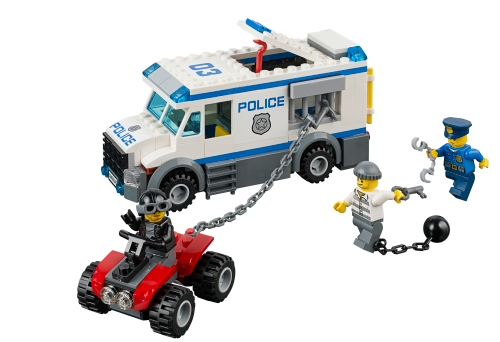
Prisoner Transporter
196 pieces · 5+
30 min – 1 h 45 min
Suggested time · Intermediate
Same theme, a new build
Official LEGO® image · © LEGO Group and/or the respective rights holders. Source: LEGO Italy ↗
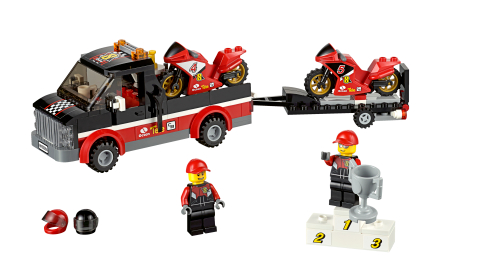
Racing Bike Transporter
178 pieces · 5+
30 min – 1 h 45 min
Suggested time · Intermediate
Same theme, a new build
Official LEGO® image · © LEGO Group and/or the respective rights holders. Source: LEGO Italy ↗
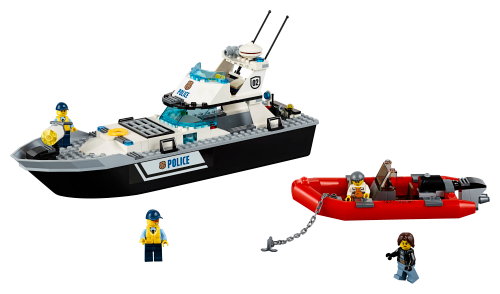
Police Patrol Boat
200 pieces · 5+
30 min – 1 h 45 min
Suggested time · Intermediate
Same theme, a new build