Beginner
≈ 3 hSuggested range1 h 45 min – 5 h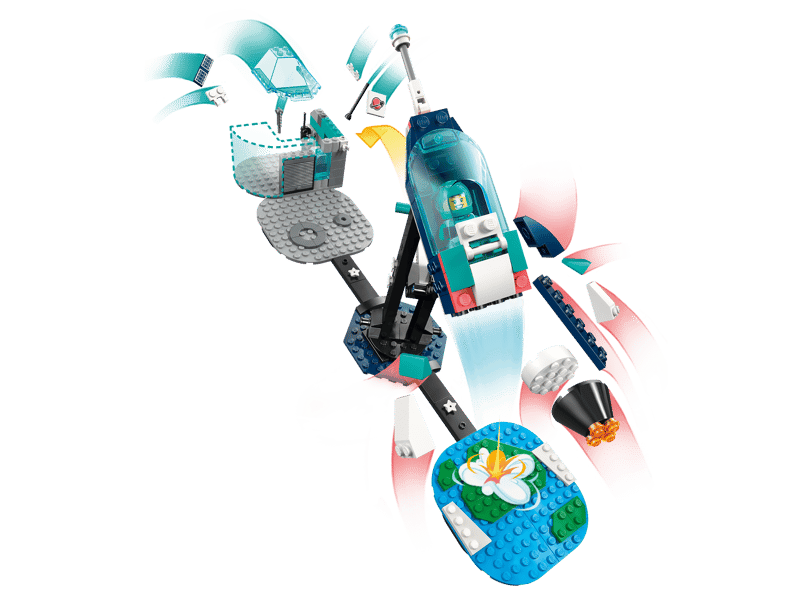
Official LEGO® image · © LEGO Group and/or the respective rights holders. Source: LEGO Italy ↗
Education · SET 45200
Moon Mission Science Kit
A buildable Moon mission brings together small space-themed models on an activity support.
- Pieces
- 519
- Release year
- 2026
- Theme
- Education
- Set number
- 45200
- LEGO recommended age
- 8+
- LEGO retail price · Italy
- 49.99 €
Available at LEGO Italy when checked on 28 October 2026. Availability can change. Check the store for the latest information.
Retail price reported by the LEGO source for the stated market. Check the store for current price and availability; this does not establish the launch price. LEGO ↗ · Reference checked on 28 October 2026
Official English name verified at: LEGO English catalogue ↗ · Checked on 26 October 2026.
TIME TO BUILD
How long does it take to build Moon Mission Science Kit?
A starting point for planning your build. Times for each experience level are editorial estimates, not measurements submitted by HowLongToBuild users.
Editorial estimate · first build
Intermediate
≈ 2 hSuggested range1 h – 3 h 15 minExperienced
≈ 1 h 30 minSuggested range45 min – 2 h 15 minBased on one person building the set for the first time, following the original instructions and using numbered bags where supplied. Includes normal piece-finding and minor adjustments; excludes long breaks, filming, dismantling and modifications. Sources may use different methods. This range is neither a statistical interval nor a limit: your build may take less or more time.
How we estimate times · sources and method
Editorial assessment of the first illustrated arrangement: A buildable Moon mission brings together small space-themed models on an activity support. The estimate covers the first illustrated setup, not every science activity in the kit. A first build following the instructions, including normal piece finding; an adult may help when needed. Breaks and subsequent play are excluded. No verified timed build: indicative values with substantial variation.
Sources do not always specify the builder’s experience. The three experience bands are our editorial assessment, based on the complexity of the set and individual accounts where available.
- LEGO · set-specific instructions ↗
Official name, pieces, age and imagery; no timed building data.
- LEGO · set manual ↗
Document for this set number. The duration is an editorial estimate, not a LEGO timing.
Checked: 26 October 2026 · Method v1.0 · Limited reports; not a statistical average.
BUILT BY THE COMMUNITY
Yours could be the first building time.
0 reviewed solo building times.
No solo building times have been reviewed yet. You can still find editorial estimates under Suggested times.
Log your buildShare your building time · no account needed
Build your own story.
Save this set to your collection and track your progress. An account lets you keep your personal build history.
Create a free account →MAKE ROOM FOR YOUR NEXT BUILD
How much display space does it need?
Assembled-model dimensions are not yet documented for this set. Box dimensions cannot tell you how much display space it needs.
BEYOND THE BRICKS
Did you know?
Inside the set
An angled structure
The support arranges elements and models in several directions rather than on a plain flat base.
LEGO sourceBuilding time
The estimate covers the first illustrated setup, not every science activity in the kit.
LEGO sourceBeyond the set
The stories, places and inventions behind your build.
One natural satellite
Earth’s only natural satellite is about 384,400 kilometres away on average.
Read the full story
Earth’s only natural satellite averages about 384,400 kilometres away, leaving room for roughly thirty Earths between them. Diagrams showing the bodies nearly adjacent compress that space. This conveys travel scale separately from the Moon’s size or its visible phases.
Why so many craters?
Its extremely thin atmosphere does not shield the surface from impacts as Earth’s atmosphere does.
Read the full story
The Moon’s tenuous exosphere offers little protection against impacts. Asteroids, meteoroids and comets left craters and fragmented its surface into regolith. Dark maria are basins filled by ancient lava, distinguishing impact scars from material that later occupied some of those depressions.
Expanded stories updated on 29 October 2026
Written by HowLongToBuild · Sources are linked with each story · Checked on 26 October 2026. Historical facts and story details refer to the context described.
THE COMMUNITY’S EXPERIENCE
What was it like to build?
Three separate scores from 1 to 10. For difficulty, 1 means very easy and 10 means very difficult.
No approved ratings yet. Scores are never generated by this site or inferred from the recommended age.
Rate this set · no account needed
Building tips from the community
Specific steps, useful checks and sticking points. Contributions appear after moderation, in their original language. Do not upload instruction pages or personal contact details.
No approved tips yet.
Sign in to contributeSET THE MOOD
A soundtrack for your build
· Selected for the building rhythm
An understated option for following the instructions and working on details, without claiming a narrative connection to the subject. This pairing follows the pace of the session; the alternatives let you change the mood.
OUR PICK
Dis
Jan Garbarek
Intimate and spaciousEditorial suggestions, not official soundtracks for the set. External services may require an account or subscription; editions and availability can vary by country. Suggest another soundtrack →
Report a problem with this set →
YOUR NEXT BUILD
You might also like
Sets from the same theme or with similar suggested building times. The ranges shown are for intermediate builders.
Official LEGO® image · © LEGO Group and/or the respective rights holders. Source: LEGO Italy ↗
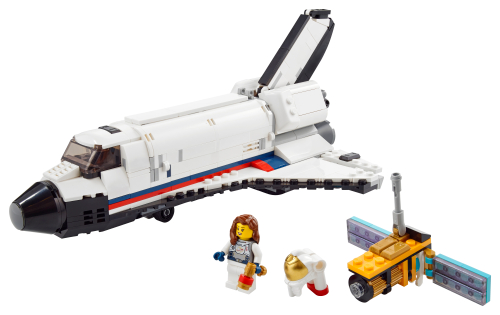
Space Shuttle Adventure
486 pieces · 8+
1 h 15 min – 3 h 30 min
Suggested time · Intermediate
Another journey into space
Official LEGO® image · © LEGO Group and/or the respective rights holders. Source: LEGO Italy ↗
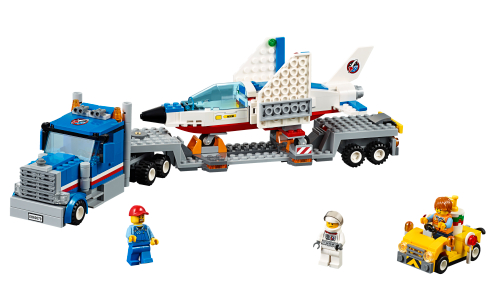
Training Jet Transporter
448 pieces · 5+
1 h 15 min – 3 h 30 min
Suggested time · Intermediate
Another journey into space
Official LEGO® image · © LEGO Group and/or the respective rights holders. Source: LEGO Italy ↗
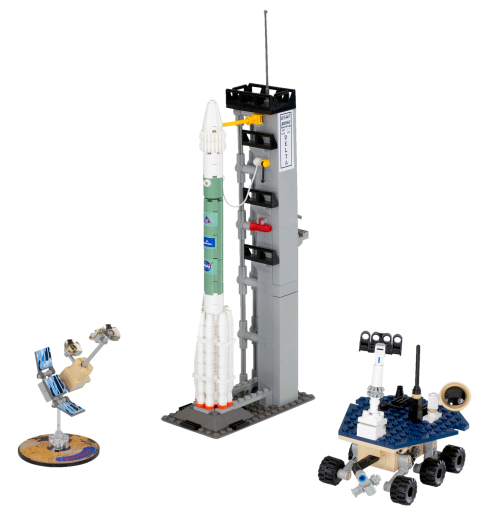
Mission to Mars
417 pieces · 9+
1 h 15 min – 3 h 30 min
Suggested time · Intermediate
Another journey into space