Beginner
≈ 2 h 15 minSuggested range1 h 15 min – 4 h
Official LEGO® image · © LEGO Group and/or the respective rights holders. Source: LEGO Italy ↗
Creator · SET 4506
Deep-Sea Predators
Buildable deep-sea creatures with fins and teeth.
- Pieces
- 352
- Release year
- 2004
- Theme
- Creator
- Set number
- 4506
- LEGO recommended age
- 6+
- Archived regional retail price · US
- 20.00 USD
Archived regional retail price in the stated market and currency. It does not establish the Italian launch price; no estimated currency conversion. Brickset ↗ · Reference checked on 28 October 2026
Official English name verified at: LEGO English archive ↗ · Checked on 26 October 2026.
TIME TO BUILD
How long does it take to build Deep-Sea Predators?
For younger children, we estimate the first illustrated setup, with adult guidance when needed. Ranges reflect building familiarity, not a child’s age or ability. Free play and learning have no completion time.
Editorial estimate · first setup
Intermediate
≈ 1 h 30 minSuggested range45 min – 2 h 45 minExperienced
≈ 1 hSuggested range30 min – 2 hFirst guided arrangement: one model for 3 in 1 sets, a small composition for creative boxes, and setup alone for expansions. Excludes play, breaks and electronic configuration. These are broad editorial estimates, not measured times or targets to meet.
How we estimate times · sources and method
Editorial assessment: Buildable deep-sea creatures with fins and teeth. The estimate covers the first model, excluding alternative animals. Creative boxes and modular decorations refer to one first illustrated arrangement; 3 in 1 sets to the main model only, and expansions to their first setup. An adult may guide the child. Ranges reflect building familiarity, not age or development; they do not measure play, learning or a speed contest. For older sets, unnumbered bags or previously mixed pieces may prolong sorting. No verified timed build: indicative values with substantial variation.
Sources do not always specify the builder’s experience. The three experience bands are our editorial assessment, based on the complexity of the set and individual accounts where available.
- LEGO · set-specific instructions ↗
Official name, pieces, age and imagery; no timed building data.
- LEGO · set manual ↗
Document for this set number. The duration is an editorial estimate, not a LEGO timing.
Checked: 26 October 2026 · Method v1.0 · Limited reports; not a statistical average.
BUILT BY THE COMMUNITY
Yours could be the first building time.
0 reviewed solo building times.
No solo building times have been reviewed yet. You can still find editorial estimates under Suggested times.
Log your buildShare your building time · no account needed
Build your own story.
Save this set to your collection and track your progress. An account lets you keep your personal build history.
Create a free account →MAKE ROOM FOR YOUR NEXT BUILD
How much display space does it need?
Assembled-model dimensions are not yet documented for this set. Box dimensions cannot tell you how much display space it needs.
BEYOND THE BRICKS
Did you know?
Inside the set
Shapes and colours
The illustrated shark has a grey back and pale belly.
LEGO sourceIn the first model
The estimate covers the first model, excluding alternative animals.
LEGO sourceBeyond the set
The stories, places and inventions behind your build.
A different skeleton
Sharks and rays have skeletons made of cartilage, the material also found in our noses and ears.
Read the full story
The Australian Museum groups sharks and rays among elasmobranchs. Cartilage also occurs in human bodies. A shark is not simply a fish without an internal framework: its framework uses different material from bone, revealing anatomy beyond its familiar screen-predator image.
Sandpaper-like skin
Shark skin is covered in tiny denticles, tooth-like structures that give it a rough texture.
Read the full story
The museum describes dermal denticles, also called placoid scales, as tiny curved and grooved tooth-like structures. They create a durable, rough surface. Looking more closely adds a different scale to the animal: its familiar outline is covered by numerous minute structures.
Expanded stories updated on 29 October 2026
Written by HowLongToBuild · Sources are linked with each story · Checked on 26 October 2026. Historical facts and story details refer to the context described.
THE COMMUNITY’S EXPERIENCE
What was it like to build?
Three separate scores from 1 to 10. For difficulty, 1 means very easy and 10 means very difficult.
No approved ratings yet. Scores are never generated by this site or inferred from the recommended age.
Rate this set · no account needed
Building tips from the community
Specific steps, useful checks and sticking points. Contributions appear after moderation, in their original language. Do not upload instruction pages or personal contact details.
No approved tips yet.
Sign in to contributeSET THE MOOD
A soundtrack for your build
· Selected for the subject and atmosphere
La mer’s orchestral surges and suspended moments complement water and movement. This is a musical reading of a landscape, with quieter alternatives available.
OUR PICK
Debussy: La Mer & Nocturnes
André Previn · London Symphony Orchestra
Narrative and cinematicEditorial suggestions, not official soundtracks for the set. External services may require an account or subscription; editions and availability can vary by country. Suggest another soundtrack →
Report a problem with this set →
YOUR NEXT BUILD
You might also like
Sets from the same theme or with similar suggested building times. The ranges shown are for intermediate builders.
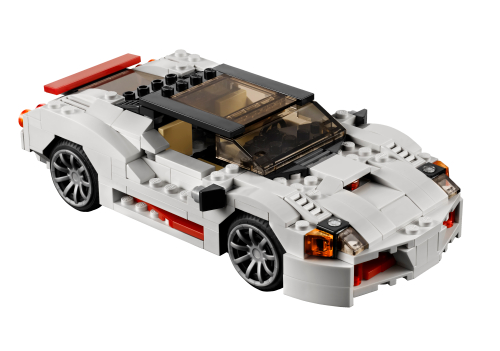
Official LEGO® image · © LEGO Group and/or the respective rights holders. Source: LEGO Italy ↗
Highway Speedster
286 pieces · 7+
45 min – 2 h 30 min
Suggested time · Intermediate
Same theme, a new build
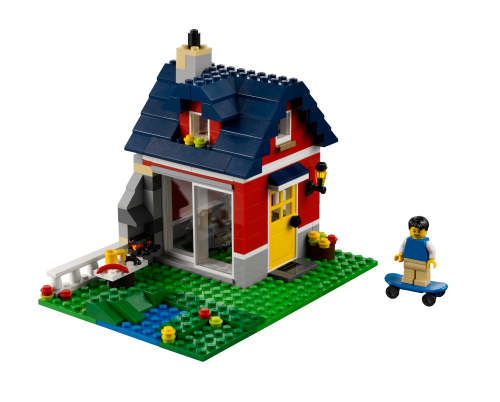
Official LEGO® image · © LEGO Group and/or the respective rights holders. Source: LEGO Italy ↗
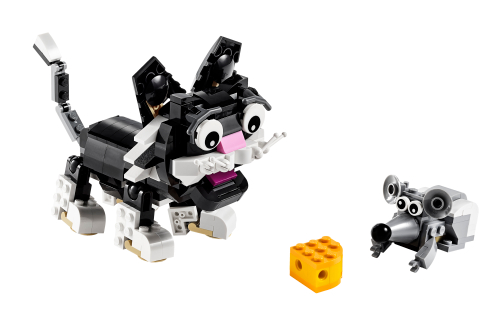
Official LEGO® image · © LEGO Group and/or the respective rights holders. Source: LEGO Italy ↗
Furry Creatures
285 pieces · 7+
45 min – 2 h 30 min
Suggested time · Intermediate
Same theme, a new build