Beginner
≈ 6 h 45 minSuggested range4 h 15 min – 10 h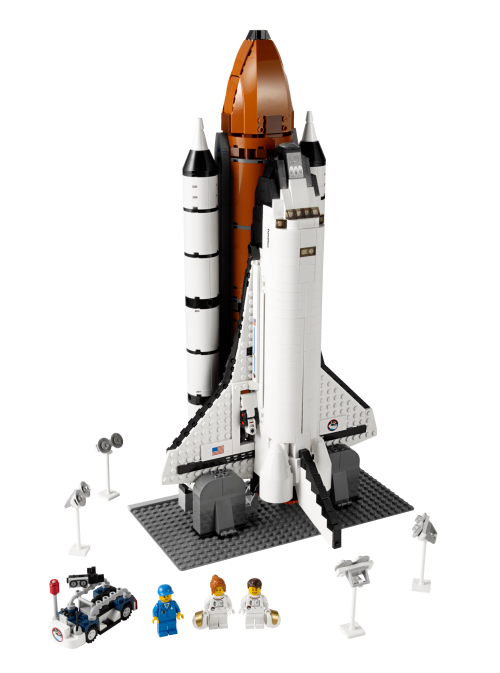
Official LEGO® image · © LEGO Group and/or the respective rights holders. Source: LEGO Italy ↗
Creator Expert · SET 10231
Shuttle Expedition
A shuttle ready for launch, complete with an orange external tank and two boosters. This large 2011 model is a distinct set from the earlier Shuttle Adventure.
- Pieces
- 1,230
- Release year
- 2011
- Theme
- Creator Expert
- Set number
- 10231
- LEGO recommended age
- 14+
- Archived regional retail price · US
- 99.99 USD
Retired from the LEGO Italy catalogue when checked on 24 October 2026. Availability can change. Check the store for the latest information.
Archived regional retail price in the stated market and currency. It does not establish the Italian launch price; no estimated currency conversion. Brickset ↗ · Reference checked on 22 October 2026
Official English name verified at: LEGO English archive ↗ · Checked on 24 October 2026.
TIME TO BUILD
How long does it take to build Shuttle Expedition?
A starting point for planning your build. Times for each experience level are editorial estimates, not measurements submitted by HowLongToBuild users.
Editorial model estimate · no verified measured building time
Intermediate
≈ 4 h 45 minSuggested range3 h – 7 hExperienced
≈ 3 h 30 minSuggested range2 h 15 min – 5 h 15 minBased on one person building the set for the first time, following the original instructions and using numbered bags where supplied. Includes normal piece-finding and minor adjustments; excludes long breaks, filming, dismantling and modifications. Sources may use different methods. This range is neither a statistical interval nor a limit: your build may take less or more time.
How we estimate times · sources and method
The orbiter, tank and boosters are separate assemblies. Symmetrical surfaces and the launch-stack connections add alignment work. Planning ranges are editorial allowances of roughly 65–145% of the central estimate, not guaranteed limits or measured averages.
Sources do not always specify the builder’s experience. The three experience bands are our editorial assessment, based on the complexity of the set and individual accounts where available.
- LEGO · model instructions and image ↗
Source for structure, pieces and components, not a measured building time. Experience-level times are editorial estimates.
Checked: 24 October 2026 · Method v1.0 · Limited reports; not a statistical average.
BUILT BY THE COMMUNITY
Yours could be the first building time.
0 reviewed solo building times.
No solo building times have been reviewed yet. You can still find editorial estimates under Suggested times.
Log your buildShare your building time · no account needed
Build your own story.
Save this set to your collection and track your progress. An account lets you keep your personal build history.
Create a free account →MAKE ROOM FOR YOUR NEXT BUILD
How much display space does it need?
Assembled-model dimensions are not yet documented for this set. Box dimensions cannot tell you how much display space it needs.
BEYOND THE BRICKS
Did you know?
Inside the set
The complete launch stack
The orbiter is joined by its external tank and two side boosters, rather than being shown only in its orbital configuration.
LEGO sourceA distinct edition
LEGO lists the 2011 set 10231 with 1,230 pieces. It is distinct from the 2010 set 10213, which has a different inventory.
LEGO sourceBeyond the set
The stories, places and inventions behind your build.
Hubble’s ride to orbit
Discovery launched on 24 April 1990 on mission STS-31, carrying the Hubble Space Telescope as its primary payload.
Read the full story
Discovery launched on 24 April 1990 carrying Hubble, which was deployed during the mission. Shuttle and telescope represent a real transport operation: one returned the crew, while the scientific payload remained in orbit to observe the universe.
Five people, five days
The crew comprised five astronauts. The mission ended at Edwards on 29 April 1990 after about five days in orbit.
Read the full story
STS-31 lasted five days, one hour and sixteen minutes. Shriver commanded, Bolden piloted, and Hawley, McCandless and Sullivan served as mission specialists. Distinct roles and procedures made deploying an orbital observatory a team operation beyond the launch itself.
Expanded stories updated on 29 October 2026
Written by HowLongToBuild · Sources are linked with each story · Checked on 24 October 2026. Historical facts and story details refer to the context described.
THE COMMUNITY’S EXPERIENCE
What was it like to build?
Three separate scores from 1 to 10. For difficulty, 1 means very easy and 10 means very difficult.
No approved ratings yet. Scores are never generated by this site or inferred from the recommended age.
Rate this set · no account needed
Building tips from the community
Specific steps, useful checks and sticking points. Contributions appear after moderation, in their original language. Do not upload instruction pages or personal contact details.
No approved tips yet.
Sign in to contributeSET THE MOOD
A soundtrack for your build
· Selected for the subject and atmosphere
Apollo’s ambient sound suggests distance and exploration. It keeps the build in the foreground, with less urgency than a cinematic march.
OUR PICK
Apollo: Atmospheres and Soundtracks (Extended Edition)
Brian Eno, Daniel Lanois & Roger Eno
Intimate and spaciousEditorial suggestions, not official soundtracks for the set. External services may require an account or subscription; editions and availability can vary by country. Suggest another soundtrack →
Report a problem with this set →
YOUR NEXT BUILD
You might also like
Sets from the same theme or with similar suggested building times. The ranges shown are for intermediate builders.
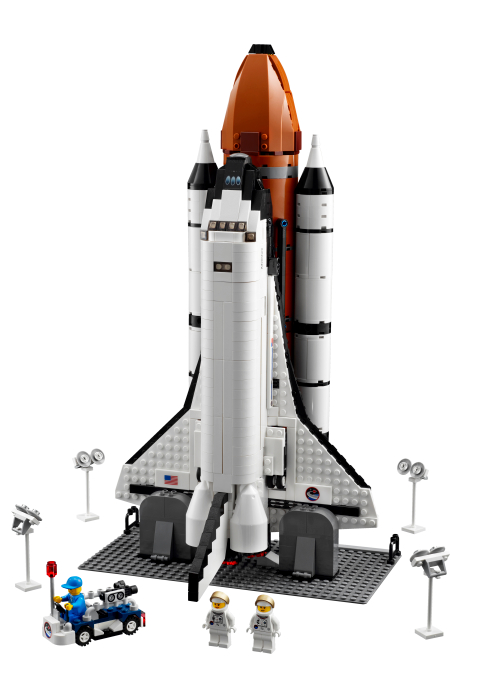
Official LEGO® image · © LEGO Group and/or the respective rights holders. Source: LEGO Italy ↗
Shuttle Adventure
1,204 pieces · 16+
3 h 15 min – 7 h 15 min
Suggested time · Intermediate
Another journey into space
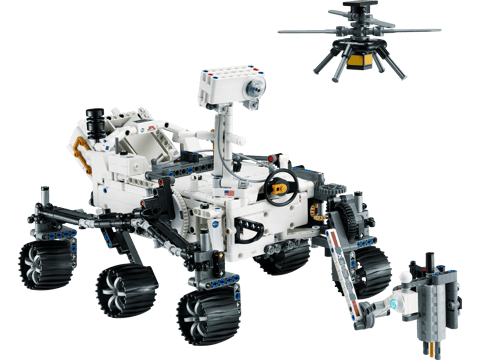
Official LEGO® image · © LEGO Group and/or the respective rights holders. Source: LEGO Italy ↗
NASA Mars Rover Perseverance
1,132 pieces · 10+
3 h 15 min – 7 h 15 min
Suggested time · Intermediate
Another journey into space

Official LEGO® image · © LEGO Group and/or the respective rights holders. Source: LEGO Italy ↗
Lunar Outpost® Moon Rover Space Vehicle
1,082 pieces · 10+
3 h 15 min – 7 h 15 min
Suggested time · Intermediate
Another journey into space